Every Melbourne business owner has heard some version of the rule: blog posts need to be at least 1,000 words, or 2,000, or whatever number a marketer once mentioned in a meeting. The truth is more useful and less tidy. Google has repeatedly said it does not use word count as a ranking factor, yet long articles consistently outperform short ones in the real world. This guide explains why both things are true, what the 2026 data actually shows, and how many words your next page really needs.
It’s a question we get from almost every new Melbourne client, usually phrased the same way: “how long does our blog post need to be to rank?” The honest answer disappoints people looking for a magic number, but it’s the one that actually works, and it applies whether you’re writing your first blog post or your hundredth.
What the research actually says
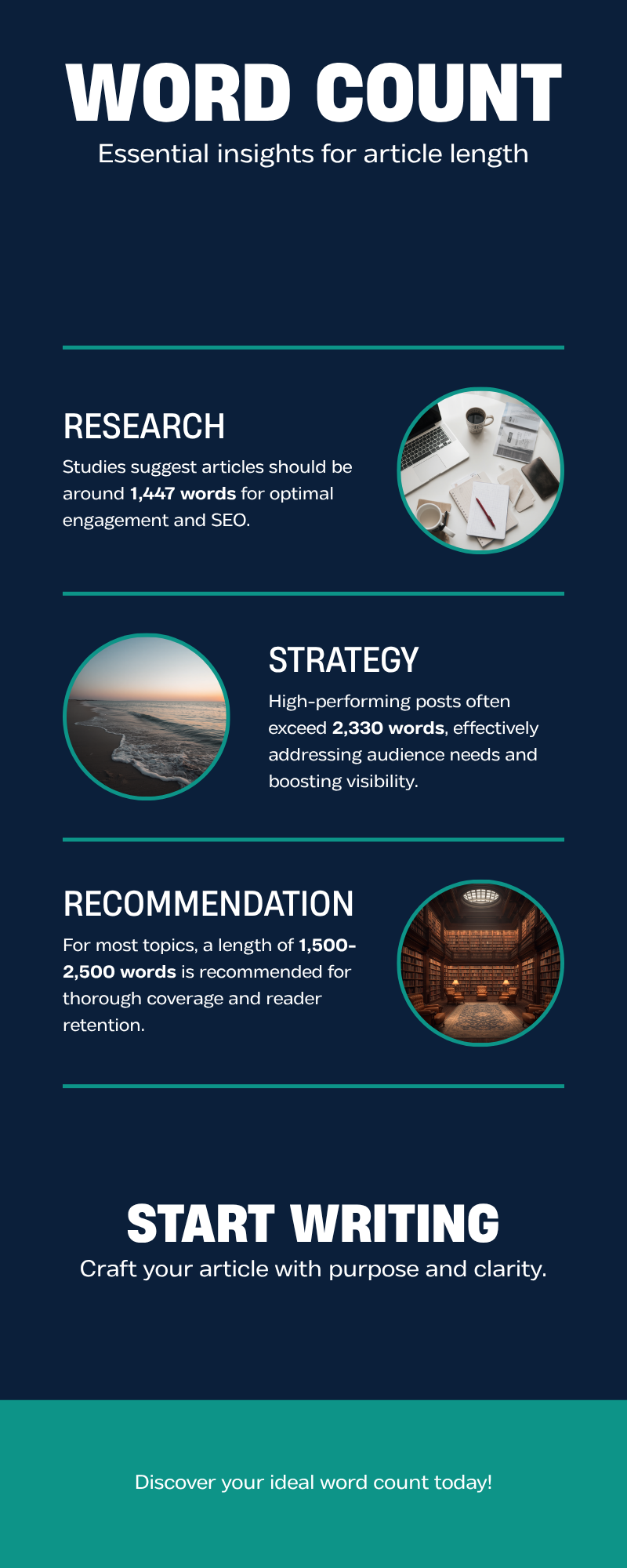
Backlinko’s analysis of 11.8 million Google search results found the average word count for a first-page result sits at roughly 1,447 words, while HubSpot’s own data shows their highest-performing posts average around 2,330 words. Neither figure means writing exactly that many words guarantees a ranking. It means that articles thorough enough to rank well also tend to run to that length, because covering a topic properly usually takes more than a few hundred words.
It’s worth being precise about what these numbers are and aren’t. They’re averages across millions of results and thousands of posts, not a target to hit on every single page. A page that ranks at 800 words because it answers a narrow, specific question completely is not an exception to some rule; it simply didn’t need more words to satisfy what the searcher was actually looking for. The average exists because most topics that people search for in competitive categories, including most Melbourne SEO and small business queries, genuinely do need more depth than 800 words allows.
Not sure if your current content is long enough, or just padded? Enter your website URL below and we’ll deliver a comprehensive, 40-point audit within 48 hours, no obligation. Claim your free audit.
Why longer content tends to rank, even though length isn’t the ranking factor
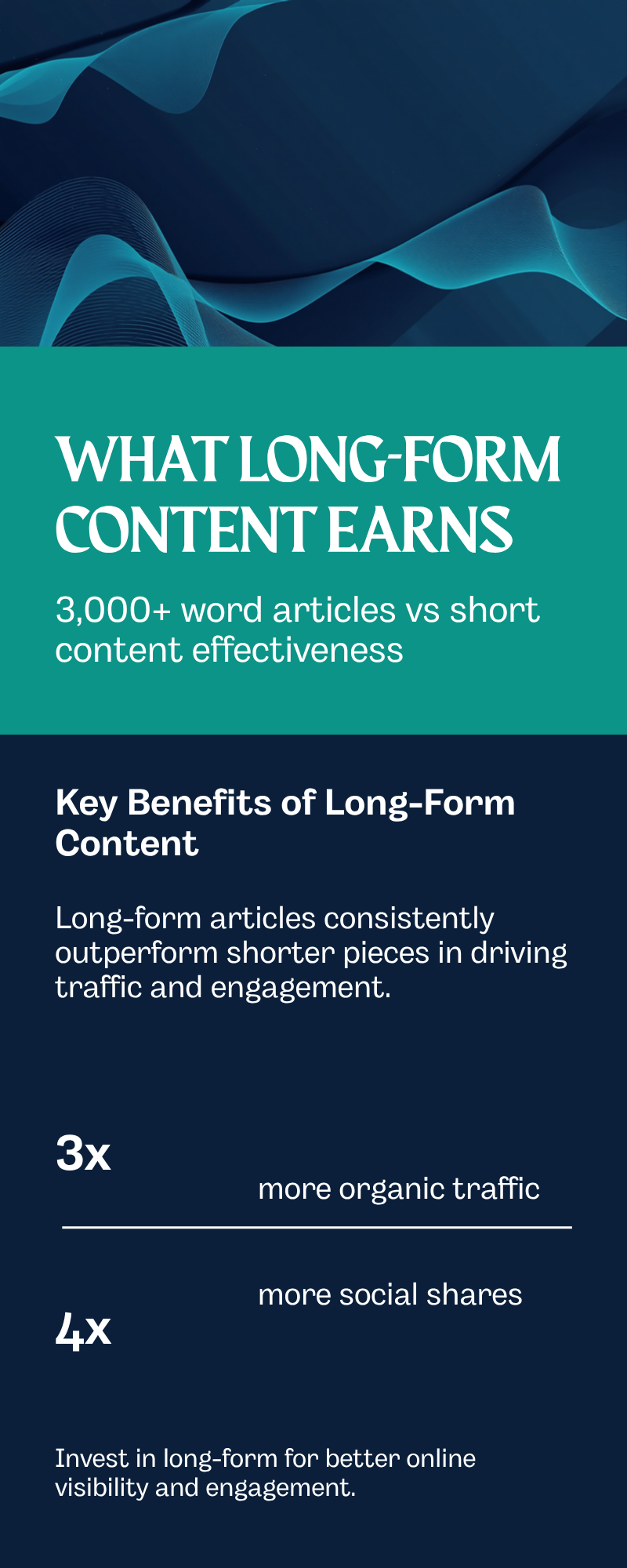
Google measures comprehensiveness, dwell time, backlinks earned and whether a reader’s question actually gets answered on the page, rather than counting words directly. Longer content simply tends to score better on all four measures, because a 600-word page usually can’t cover a topic as thoroughly as one that runs to 1,500 words. Content over 3,000 words earns noticeably more referring domains than short content and tends to attract more organic traffic, social shares and backlinks along with it, largely because other sites have more reason to link to something genuinely useful and complete.
There’s a second factor worth naming directly: since 2025, a growing share of search traffic is being shaped by AI-generated overviews and chat-based answer engines that summarise multiple sources at once. Thin, generic pages are the easiest to summarise and skip past. Genuinely comprehensive pages, the kind that answer follow-up questions before a reader even asks them, are more likely to be the source an AI system actually cites or a reader clicks through to for the full picture. Length is a side effect of that comprehensiveness, not the cause of it.
| Long-form content performance (3,000+ words vs short content) | Reported difference |
|---|---|
| Organic traffic | 3x more |
| Social shares | 4x more |
| Backlinks earned | 3.5x more |
| Referring domains | +77.2% more |
Source: Long-form content backlink and ranking impact statistics, 2026
So what should you actually aim for?
The honest answer is whatever length genuinely satisfies the search intent better than every other page currently ranking for that term. For most informational blog posts aimed at Melbourne small business owners, that lands somewhere between 1,500 and 2,500 words. A simple “what is” question might need only 600 words to answer properly, and padding it out to 1,500 with repetition will hurt more than help. A genuine comparison guide, a full how-to, or anything a reader might use to make a decision usually needs the full range to cover every angle a reader actually cares about.
This is exactly why our own blog standard sits at 1,450 to 1,600 words per article: long enough to be genuinely useful, short enough that nothing is there just to hit a number. If your own content strategy needs a second opinion, talk to our Melbourne team about what your specific pages actually need.
Different page types on the same website legitimately need different lengths. A homepage service summary might only need 150 words per service, because its job is to orient a visitor and send them deeper into the site, not answer every question on the spot. A dedicated service page, the one that actually needs to rank for “SEO agency Melbourne” or similar, typically performs better at 1,000 to 2,000 words once you include FAQs, process detail and proof points. A comparison or “best of” style guide, like the ones covering how to choose between agencies or providers, often needs to run longer again, simply because it’s covering more ground on behalf of the reader so they don’t have to visit five different sites themselves.
What goes wrong when businesses chase word count
The most common mistake is padding: restating the same point three different ways to stretch a 700-word article to 1,500. Readers notice immediately, bounce rates climb, and Google’s own quality signals pick up on the poor engagement even without directly measuring word count. The second common mistake runs the other way: cramming a genuinely complex topic, such as a full pricing and process explainer, into 400 words because “shorter is better for readability”. Both approaches lose to a well-structured article that uses exactly as many words as the topic needs, broken into scannable sections with clear headings.
There’s a third mistake that’s become more common since AI writing tools arrived: generating a long draft quickly and publishing it with only a light edit. The word count looks right, but the content is often generic enough that it could sit on any business’s blog in any city. Google’s guidance on helpful content specifically calls out material that shows little real expertise or first-hand knowledge, and generic AI output is exactly the kind of content that struggles here, regardless of how many words it runs to. The fix isn’t avoiding these tools entirely, it’s making sure the finished piece includes specific, first-hand detail that only someone who actually does this work would know to include.
Structure matters as much as length. A 2,000-word article with no subheadings is harder to read than a well-organised 1,200-word one. Our guide to header tags and content structure covers how to break long content into something readers and Google can both scan properly, and pairs directly with the length decisions covered here.
How this connects to keyword research and structure
Word count decisions shouldn’t happen in isolation from the rest of your content plan. Our keyword research guide covers how to figure out what a page actually needs to cover before you write a single word, and our piece on internal linking strategy explains how longer, more comprehensive pages tend to attract more internal links naturally, since they cover more subtopics worth linking to from elsewhere on your site.
Quick FAQ
Does Google penalise short content? No, there’s no length-based penalty. A short page that fully answers a narrow question can outrank a long page that wanders. See our FAQ for more on how Google actually evaluates content quality.
Should every page on my site be 1,500+ words? No. Product pages, contact pages and simple service pages usually work better shorter and more direct. The length guidance here applies specifically to blog posts and guides meant to rank for informational searches.
How do I know if my existing content is too short? Compare it against what’s currently ranking on page one for the same keyword. If competitors are covering five subtopics your page doesn’t touch, length is masking a coverage gap rather than a word count problem on its own. Read the top three results properly before you rewrite anything; the gap is usually obvious once you see it laid out side by side.
Word count was never really the point, comprehensiveness was. Chase the second and the first tends to take care of itself. A page that genuinely answers what a Melbourne searcher is asking, in as many or as few words as that takes, will consistently outperform one written to hit an arbitrary number. Claim your free, no-obligation SEO audit and we’ll show you exactly where your content stands. Get free audit. For more guides like this one, visit the blog.
Leave a Reply